


What does 2-ply cashmere mean, and is 4-ply cashmere always better? In luxury knitwear, ply refers to the number of individual spun strands twisted together to create a single balanced knitting thread — not the number of fabric layers. 2-ply cashmere (2/26 Nm knitted at 12gg) is the industry gold standard for three-season indoor and blazer layering (~260–340g), while 3-ply, 4-ply, and 6-ply+ yarns (knitted at 7gg or 3gg) deliver dense, wind-blocking outerwear warmth (~450–850g). At MITONY Bespoke Cashmere, every sweater is knitted to order from 15.5–15.8μm (38–42mm staple) 100% Inner Mongolian cashmere, 80/20 cashmere-wool, 18.5μm extra fine Australian merino wool, or Tencel mulberry silk across 3gg, 7gg, 12gg, and 16gg in US sizes XS to 5XL with custom centimetre adjustments and a 1-piece minimum ($220–$725 USD, free global shipping in 2–3 weeks).
What “Ply” Actually Means in Cashmere Spinning (2/26 Nm Explained)
Across r/BuyItForLife, r/malefashionadvice, and r/Cashmere, two misconceptions come up repeatedly: buyers either assume a “2-ply” sweater is made of two separate layers of fabric sewn together, or they assume a 4-ply sweater is automatically twice the fibre quality of a 2-ply sweater.
In textile engineering, yarn architecture is expressed in Metric Count (Nm) — most commonly 2/26 Nm for fine luxury cashmere:
- Why 1-Ply Cashmere Fails Quickly: When a single strand of cashmere roving is spun in one direction (Z-twist), it carries rotational torque. Under repeated wear and washing, a 1-ply sweater often develops “spirality” (side seams twisting around the torso) and sheds loose surface fibres because there is no counter-twist locking the hairs in place.
- How 2-Ply Creates Structural Equilibrium: To spin 2/26 Nm cashmere, two single strands (each measuring 26 kilometres per kilogram) are twisted together in the opposite direction (S-twist). This counter-rotation neutralizes internal torque, locks fibre ends inside the yarn core to dramatically reduce pilling, and creates microscopic air pockets between the two strands that trap body heat.
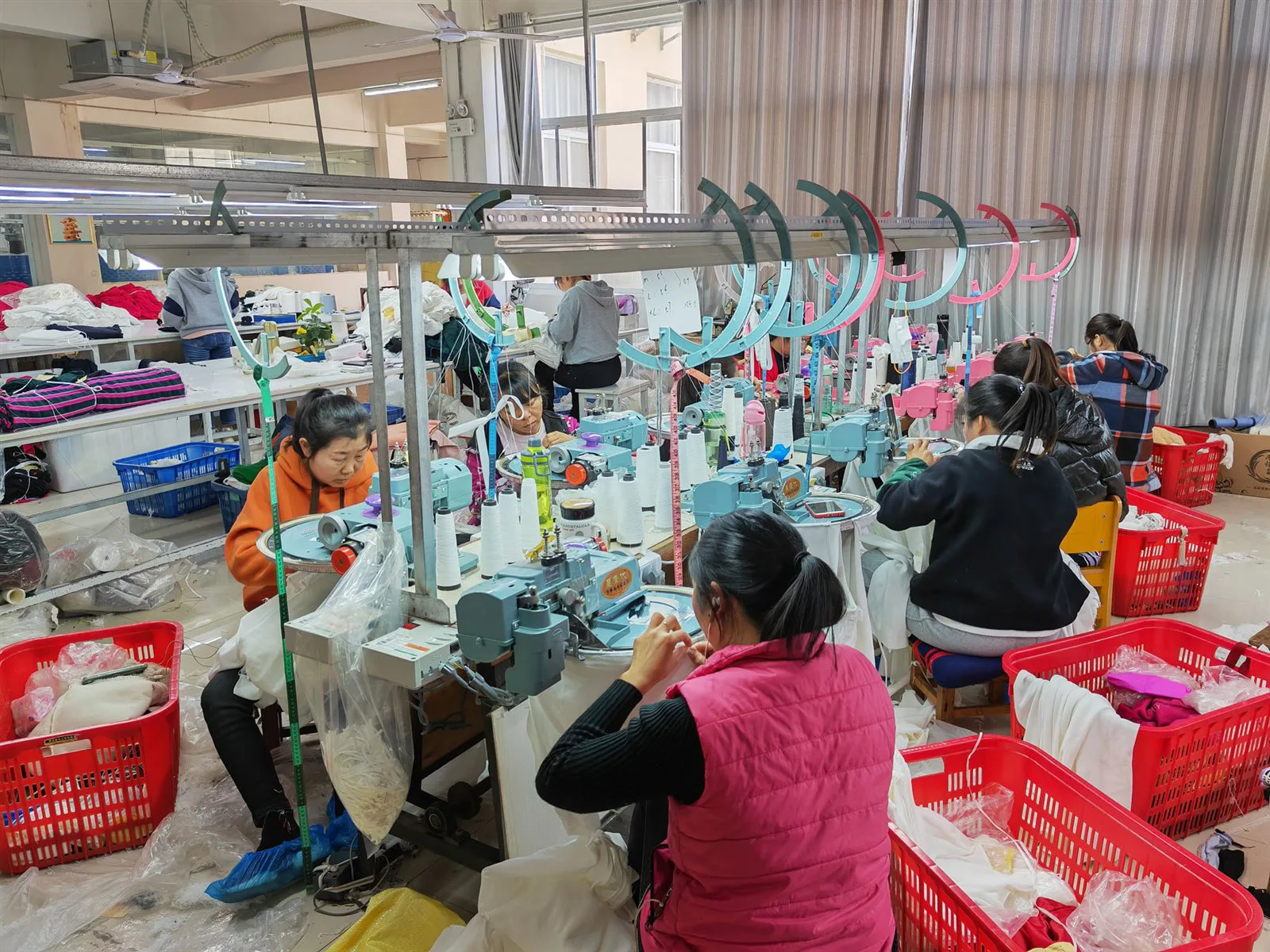
- How 3-Ply, 4-Ply & Multi-Ply Work: When knitting heavier 7gg mid-chunky or 3gg heavy cable knitwear, our computerized flatbed machines feed multiple 2/26 Nm ends together (forming 4-ply, 6-ply, or 8-ply yarn bundles) so each knitted loop fills the wider needle spacing with dense, resilient loft.
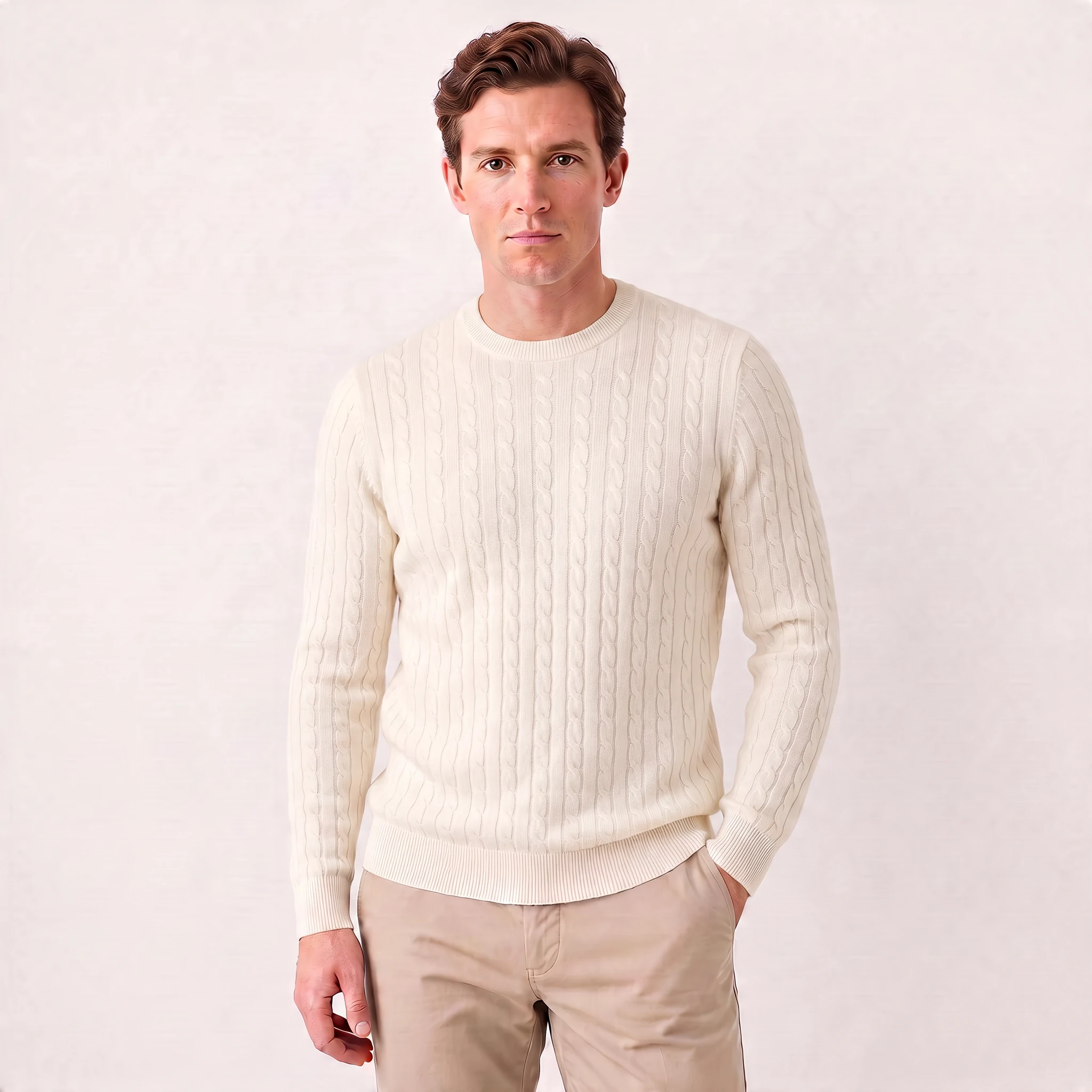
Technical Comparison: 1-Ply vs 2-Ply vs 4-Ply vs 6-Ply/8-Ply Cashmere
The table below compares yarn ply constructions across finished garment weight (Size L crew neck benchmark), optimal knitting gauge, thermal comfort range, and best layering use cases:
| Yarn Ply Construction | Matching Knitting Gauge | Finished Sweater Weight (Size L) | Comfort Temperature Range | Drape, Hand-Feel & Best Wardrobe Role |
|---|---|---|---|---|
| 1-Ply (Single Strand) | 14gg–16gg ultra-light | 150g – 195g | 16°C to 24°C (60°F–75°F) | Sheer, delicate summer/travel knit; lower abrasion resistance inpure cashmere (better suited to 18.5μm merino or Tencel silk) |
| 2-Ply (2/26 Nm Standard) | 12gg (or fine 16gg) | 260g – 340g | 8°C to 20°C (46°F–68°F) | The 3-Season Gold Standard: Breathable, zero bulk under tailored blazers & suits; ideal for heated offices and everyday wear |
| 3-Ply to 4-Ply | 7gg mid-chunky | 420g – 560g | 0°C to 14°C (32°F–57°F) | Structured Autumn/Winter Staple: Pronounced stitch definition, high wind resistance, stands up cleanly in zip cardigans & roll-necks |
| 6-Ply to 8-Ply+ | 3gg heavy chunky / cable | 620g – 880g+ | -15°C to 8°C (5°F–46°F) | Heirloom Sub-Zero Shield: Deep 3D cable and fisherman rib architecture; functions as a standalone knit jacket or fireside layer |
Why Fibre Grade Beats Ply Count Every Time
One of the most valuable insights shared by textile engineers and veteran collectors on r/BuyItForLife is that a tightly knitted 2-ply sweater made from Grade-A long-staple cashmere will outlast a loosely knitted 4-ply sweater made from short, over-processed fibres:
- Staple Length (38–42mm vs <30mm): If a brand spins a 4-ply yarn using short 26–28mm combed scraps, thousands of short fibre tips still protrude per centimetre and form fuzz balls within weeks. Because MITONY Bespoke Cashmere uses 15.5–15.8μm Grade-A Inner Mongolian underfleece with a 38–42mm staple length, even our lightweight 12gg 2-ply sweaters maintain a smooth, dense surface across years of wear.
- Stitch Density (Tight vs Slack Tension): Some mass-market brands advertise “2-ply cashmere for $99” by dropping the knitting tension so the loops are large and slack — using only 160 grams of yarn where a proper 12gg sweater requires 280–320 grams. Hold your sweater up to a window: a properly tensioned 12gg 2-ply knit should present an opaque, uniform stitch grid, never a see-through mesh.
- Matching Ply to Silhouette:
- For layering under tailored suiting without armhole bunching, choose a 12gg 2-ply Men’s Cashmere Crew Neck Sweater, Women’s Cashmere V-Neck Vest, or Men’s Cashmere V-Neck Vest.
- For structured outerwear transitions, choose a 12gg or 7gg multi-ply Women’s Mock Neck Zip Cardigan, Men’s Mock Neck Zip Cardigan, or Women’s Cable Knit Cashmere Sweater.
How to Choose Your Ideal Ply, Gauge & Custom Fit Online
In the Create My Sweater configurator at MITONY Bespoke Cashmere, you control both the thermal weight and the exact garment geometry:
- Select Your Gauge & Ply Architecture: Choose 16gg (ultra-fine breathable layering), 12gg (classic 2-ply all-season luxury), 7gg (4-ply structured winter warmth), or 3gg (6-ply to 8-ply heavy cable and rib statement knitwear) — see our complete How to Choose a Cashmere Sweater Guide.
- 4 Natural Luxury Yarns Across 188 Shades: Compare 100% Inner Mongolian cashmere (78 colours), 80% cashmere / 20% fine wool (26 colours), 18.5μm extra fine Australian merino wool (69 active colours), and 90% Tencel / 10% mulberry silk (15 colours).
- Made-to-Measure Sizing (XS to 5XL): Whether you need tall men’s extra sleeve length, plus-size chest grading up to 5XL, or petite torso reductions, every piece is individually knitted to your centimetre specifications with a 1-piece MOQ.
Frequently Asked Questions
What does 2-ply cashmere mean?
2-ply cashmere means two individual spun strands of cashmere yarn (typically 2/26 Nm metric count) are twisted together in opposite directions to create one balanced, resilient knitting thread. It refers to the yarn construction, not two separate layers of fabric.
Is 2-ply cashmere good quality or too thin?
High-density 2-ply cashmere knitted at 12 gauge (~260–340g) from Grade-A 15.5–15.8μm long-staple (38–42mm) Inner Mongolian fibres is the global luxury gold standard for three-season wear. It is breathable enough for heated indoor offices and slim enough to layer smoothly under tailored blazers without bulk.
When should I choose 4-ply or 6-ply cashmere over 2-ply?
Choose 4-ply (7gg mid-chunky, ~420–560g) or 6-ply to 8-ply (3gg heavy chunky/cable, ~620–880g) when you want a standalone cold-weather sweater or knitted jacket for outdoor temperatures between -15°C and 12°C (5°F–54°F), or when you prefer bold 3D cable and fisherman rib textures.
Does 4-ply cashmere pill less than 2-ply cashmere?
Pilling depends primarily on fibre staple length (38–42mm vs <30mm), micron fineness (15.5–15.8μm), and twist tension rather than ply count alone. A tightly spun 2-ply Grade-A cashmere sweater pills far less than a loosely spun 4-ply sweater made from short recycled fibres.
Continue Reading in the Bespoke Journal

Cashmere Sweater Neckline Guide: Crew Neck vs V-Neck vs Turtleneck vs Mock Neck & Polo
Choose a Crew Neck for longer face shapes and standalone casual wear; a V-Neck to elongate rounder/square faces and frame collared dress shirts; a…

Inner Mongolian vs Scottish vs Italian Cashmere: What Actually Determines Sweater Quality?
Over 70% of the world's finest Grade-A raw cashmere (14.5–15.8μm, 38–42mm staple length) originates on the Inner Mongolian plateau, which is also where heritage…

Petite Custom Cashmere Sweaters: Solving Long Sleeves & Short Torso Fit Without Tailoring
Tailors cannot easily shorten cashmere sweater sleeves or hems because cutting knitted loops causes unravelling and destroys the tubular ribbed cuff, while hand re-linking…