


To achieve a flawless made-to-measure sweater fit, always measure your best-fitting existing sweater laid flat on a hard table—recording half-chest width (pit-to-pit), shoulder seam-to-seam width, outer sleeve length, and body length without stretching the yarn. At MITONY Bespoke Cashmere (Suzhou Nice Sweater Clothes Co., Ltd. / 苏州纳威特服饰有限公司), we knit your exact specifications to order using 15.5–15.8μm Inner Mongolian cashmere, 18.5μm Australian extra-fine merino wool, and Tencel mulberry silk across 3gg/7gg/12gg/16gg gauges and 194 colours (78 pure cashmere + 26 80/20 cashmere-wool + 75 merino + 15 Tencel-silk) in XS–5XL or custom ±cm sizing (1-piece MOQ, $220–$725 USD, free worldwide shipping in 2–3 weeks).
Should You Measure Your Body or a Well-Fitting Sweater for Custom Knitwear?
For bespoke knitwear, measuring an existing sweater laid flat on a table is significantly more reliable than measuring your bare body because flat garment measurements already account for knitwear drape, armhole drop, and the exact “positive ease” (breathing room) you personally prefer.
Unlike woven dress shirts or tailored suit jackets, knitted fabrics made from Grade-A cashmere or superfine merino wool possess natural three-dimensional loop elasticity. When you wrap a tape measure around your bare chest, it is easy to pull too tight or forget to add the 4–10 cm of total circumference ease required for comfortable movement. By laying a favorite pullover or cardigan flat on a dining table, smoothing out wrinkles without tugging the yarn, and measuring seam to seam in centimeters, you can replicate—or fine-tune by ±1 cm to ±8 cm—a proven silhouette inside our Create My Sweater 3D Configurator.
How Do You Measure Half-Chest (Pit-to-Pit), Body Length, Shoulder, and Sleeve Length Flat?
Lay your reference sweater completely flat on a hard surface (buttoned or zipped closed if it is a cardigan), smooth the fabric gently with your palms without stretching the knit loops, and record the core measurements in centimeters using a soft tailor’s tape held flat against the knit.
| Measurement Point | Exact Flat-Lay Tape Placement (Industry Standard) | Typical Custom Adjustment Use Case |
|---|---|---|
| 1. Chest Width (Half-Chest / Pit-to-Pit) | Measure horizontally straight across the front from the left side seam to the right side seam, 2.5 cm (1 inch) below the bottom of the armhole seam. (Multiply by 2 for full chest circumference.) | Add +2 cm to +3 cm for dress-shirt layering or plus-size XL–5XL comfort; subtract −1.5 cm for a tailored under-blazer fit. |
| 2. Body Length (Shoulder to Hem) | Place the tape at the High Point Shoulder (HPS)—where the shoulder seam meets the base of the collar ribbing—and measure straight down parallel to the center line to the bottom edge of the hem rib. | Add +4 cm to +8 cm for tall men (6’2″–6’8″); subtract −3 cm to −6 cm for petite proportions so the hem hits cleanly at the hip. |
| 3. Shoulder Width (Seam to Seam) | Smooth the upper back flat and measure straight across from the left top shoulder seam point to the right top shoulder seam point where the sleeve crown joins the body. | Widening shoulder width by +1.5 cm to +2.5 cm prevents shoulder seam dimples on broad athletic frames. |
| 4. Sleeve Length (Shoulder to Cuff) | Place the zero mark at the top outer shoulder seam and measure straight down the outer fold of the sleeve all the way to the bottom edge of the ribbed wrist cuff. | Eliminates short wrists on long arms (+3 cm to +7 cm) or bunching cuffs on shorter arms without post-purchase alteration. |
| 5. Hem Width & Armhole Width | Hem Width: Measure straight across the bottom ribbed waistband from left edge to right edge. Armhole Width: Measure from the top shoulder seam straight down to the underarm pit seam. |
Customizing hem width prevents waistband ride-up over trousers; adding +1.5 cm to armhole depth gives dress shirts room to move. |
| 6. Neck Width & Collar Height | Measure horizontally across the inner collar seam from left to right (17–21 cm standard), and vertically up the ribbed neckband or turtleneck / mock neck stand. | Keeps the neckline proportional on broad necks or 3XL–5XL custom orders so the collar never sags. |
How Much Positive Ease Should You Add for Slim, Regular, or Shirt-Layering Fit?
If you only have your bare body chest circumference and do not have a reference sweater to measure flat, divide your bare chest circumference by two and add +2 cm to +3 cm of flat half-chest ease for a slim fit, +4 cm to +5 cm for a classic regular fit, or +6 cm to +7 cm for relaxed outer layering.
In luxury knitwear pattern making, positive ease is the difference between your actual body measurement and the finished flat garment measurement. Because 15.5–15.8μm Grade-A Inner Mongolian cashmere drapes softly against the torso, choosing the right ease prevents both clinginess and excess bulk:
- Next-to-Skin & Under-Suit Fit (+2 cm to +3 cm Half-Chest Ease): Ideal for a fine-gauge 12gg or 16gg cashmere mock neck (mockneck) or turtleneck pullover worn under a tailored blazer. If your bare chest is 100 cm around (50 cm half-chest), a 52–53 cm flat garment chest width creates a sleek, wrinkle-free silhouette.
- Classic Everyday & Dress-Shirt Layering Fit (+4 cm to +5 cm Half-Chest Ease): Ideal for a crew neck or V-neck cashmere sweater or polo cardigan worn over an Oxford button-down shirt. A 100 cm bare chest pairs best with a 54–55 cm flat half-chest width so the shirt underneath never bunches.
- Outerwear Cardigans, Hoodies & Heavy Cable Knits (+6 cm to +8 cm Half-Chest Ease): For a full-zip driver’s cardigan, knitted travel hoodie, or chunky 3gg/7gg sweater, extra ease accommodates thicker base layers and three-dimensional stitch loft.
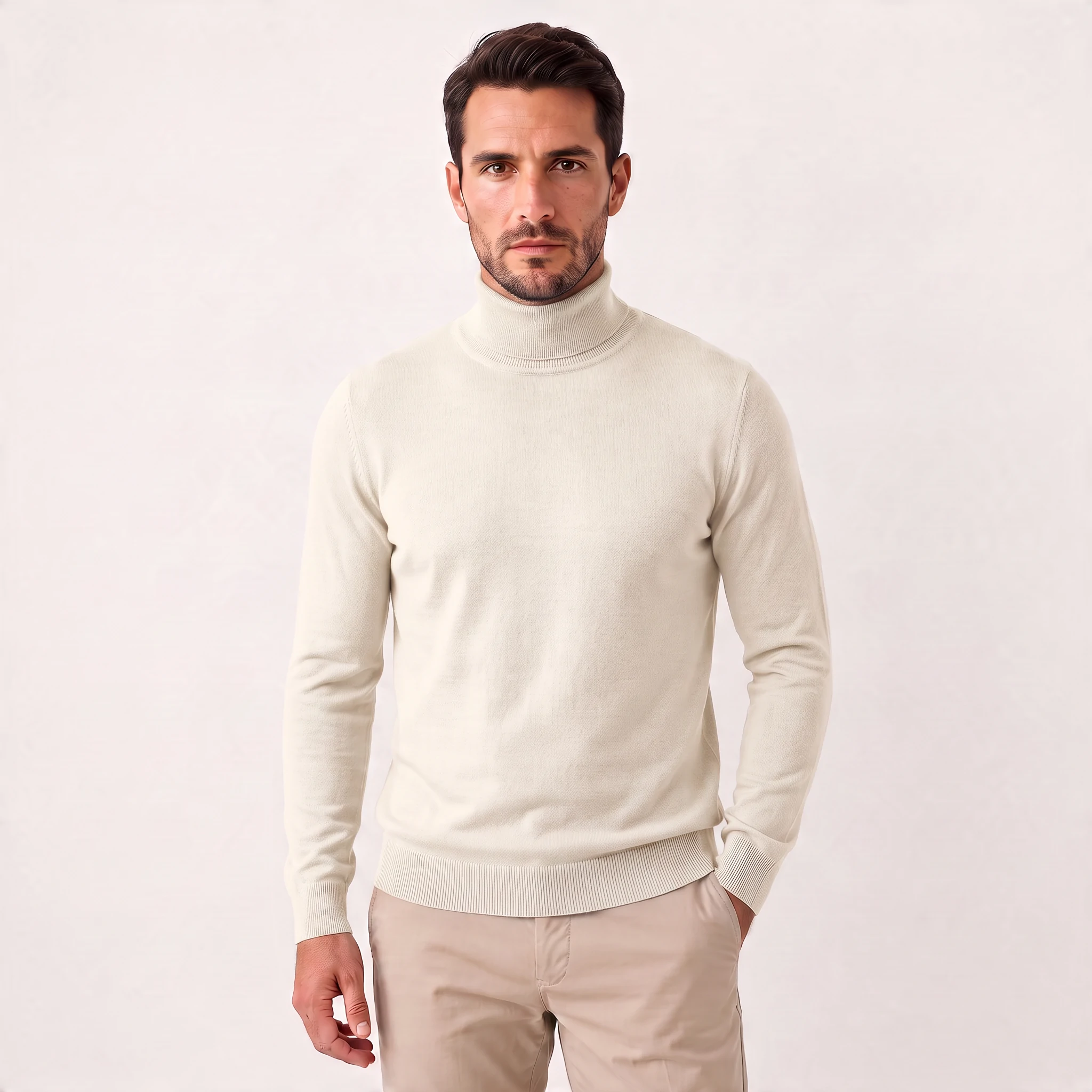
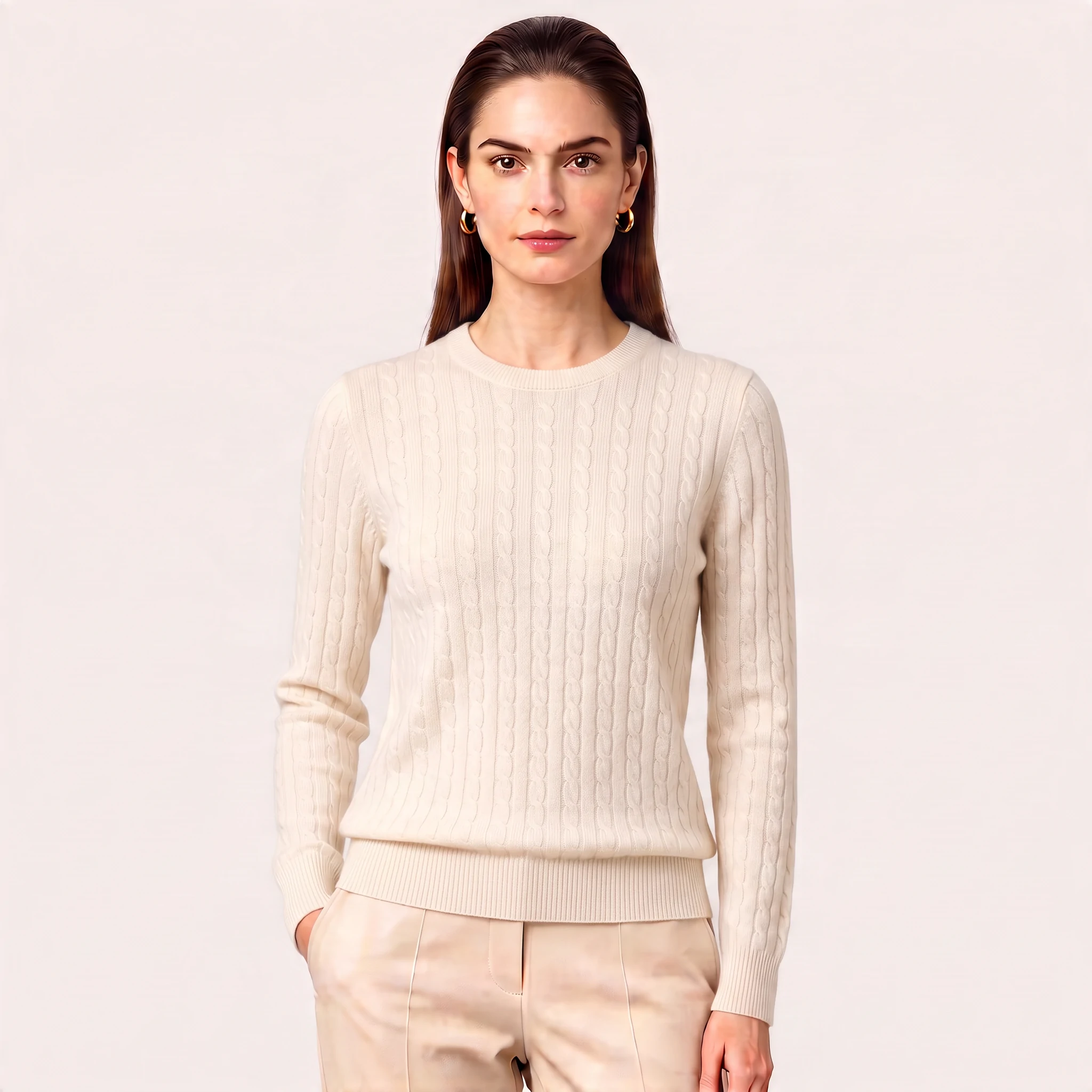
How Do 3gg/7gg Chunky Gauges vs 12gg/16gg Fine Gauges Affect Sweater Measurements?
When switching from a fine 12gg or 16gg plain knit to a heavy 3gg or 7gg chunky or cable-knit cashmere sweater, we recommend adding +1.5 cm to +2.5 cm to flat chest width because thicker multi-ply yarns and 3D cable twists occupy internal garment volume.
As explained in our 3gg vs 7gg vs 12gg vs 16gg sweater gauge guide and cable-knit vs plain-knit comparison, outside flat measurements tell only part of the story when wall thickness changes:
- Cable-Knit Horizontal Rib Contraction: Traditional Aran cable crossovers pull the fabric slightly inward like natural ribbing. If you wear a 53 cm flat half-chest in a 12gg plain jersey pullover, ordering 54–55 cm in a 7gg cable-knit pullover ensures identical interior comfort.
- Yarn Elasticity Across Our 4 Fiber Families: If you want maximum snap-back memory at the elbows and cuffs on a custom-fitted garment, compare 100% pure cashmere vs our 80/20 cashmere-merino wool blend or 18.5μm Australian merino wool.
How Do You Enter Your Custom Centimeter Measurements in MITONY’s 3D Configurator?
Inside MITONY’s Create My Sweater 3D Configurator, simply select the standard US base size (XS to 5XL) closest to your frame, open the custom measurement panel, and adjust body length, chest width, shoulder width, sleeve length, and cuff/hem dimensions in 1-centimeter increments.
- Start with Your Base US Size (XS–5XL): Every silhouette comes pre-loaded with our master graded size chart (which you can view anytime by clicking Find My Fit on any product page or inside the configurator).
- Fine-Tune Any Dimension in Centimeters: Need a standard Medium chest (52 cm) but an Extra-Large sleeve length (66 cm) and +4 cm body length? Adjust only the fields you want changed; our Stoll CAD programming automatically re-grades the armhole curve and sleeve taper so the garment hangs seamlessly.
- 1-Piece Minimum Order & Saved Fit Profile: Once you find your ideal centimeter formula, you can reorder any of our 12 silhouettes across 194 yarn colours with zero guesswork—delivered free worldwide in 2–3 weeks.
Frequently Asked Questions
Should I measure my body or an existing sweater when ordering custom knitwear?
Measuring a well-fitting sweater laid flat on a hard surface is the most accurate method because it already includes your preferred garment ease and drape. Simply measure half-chest (pit-to-pit), shoulder width, sleeve length, and body length in centimeters, then add or subtract centimeters for any adjustment you want.
What is half-chest (pit-to-pit) width on a custom cashmere sweater size chart?
Half-chest width (also called flat chest or pit-to-pit) is measured horizontally across the front of a flat sweater from the left side seam to the right side seam, 2.5 cm (1 inch) below the underarm seam. Doubling the half-chest number gives the total garment chest circumference.
How much ease should I add if I only have my bare chest measurement?
Divide your bare chest circumference in centimeters by 2, then add +2 cm to +3 cm to the flat half-chest width for a slim under-jacket fit, +4 cm to +5 cm for a classic regular fit over dress shirts, or +6 cm to +7 cm for a relaxed outer cardigan or heavy cable-knit fit.
Where is sweater body length measured from—the top of the collar or the shoulder seam?
Sweater body length is measured from the High Point Shoulder (HPS)—the exact intersection where the top shoulder seam meets the base of the collar ribbing—straight down to the bottom edge of the waistband hem, excluding the height of the collar or turtleneck itself.
Continue Reading in the Bespoke Journal

Crew Neck vs V-Neck Cashmere Sweater: Shirt Layering, V-Drop Depth & Custom Fit Guide
A crew neck cashmere sweater features a rounded ribbed collar (17–21 cm width) ideal for casual tees, Oxford button-downs, and standalone winter warmth, while…

100% Pure Cashmere vs 80/20 Cashmere-Merino Wool Blend: Warmth, Elasticity & Custom Fit Guide
100% pure Grade-A Inner Mongolian cashmere (15.5–15.8μm, 78 colours) offers maximum cloud-like softness, ultralight warmth, and zero-itch bare-skin comfort, while an 80% cashmere /…

Cashmere Polo Sweater & Polo Cardigan Guide: Collar Roll, Blazer Layering & Custom Fit
A custom cashmere polo sweater or polo-neck button cardigan combines the collar structure of a dress shirt with the softness of fully-fashioned luxury knitwear—making…