


Should you choose a Cable Knit or Plain Knit (jersey stitch) cashmere sweater? Choose Plain Knit if you want a sleek, flat-draping garment (220–320g in 12gg) that slides effortlessly under tailored suit jackets and works across three seasons. Choose Cable Knit if you want maximum winter insulation and architectural texture: crossing stitches over adjacent needles uses 35%–45% more cashmere yarn by weight (360–680g depending on gauge) and creates raised thermal air pockets that block cold wind. At MITONY Bespoke Cashmere, both stitch structures are knitted to order in 15.5–15.8μm Grade-A Inner Mongolian cashmere, 80/20 cashmere-wool, 18.5μm extra fine Australian merino wool, and 90/10 Tencel mulberry silk across US sizes XS to 5XL with custom centimetre adjustments and a 1-piece minimum ($220–$725 USD, free worldwide express shipping in 2–3 weeks).
1. The Knitting Physics: How Stitch Structure Changes Sweater Weight & Loft
When shopping for luxury knitwear—or configuring a custom garment in the MITONY 3D Sweater Customizer—one of the most impactful structural choices is selecting between Plain Knit (known technically as single-jersey or stockinette stitch) and Cable Knit.
Even when knitted on the exact same flatbed machine at the same needle gauge (such as 12gg or 7gg) using the same 2/26Nm cashmere yarn, Plain Knit and Cable Knit behave like two completely different fabrics:
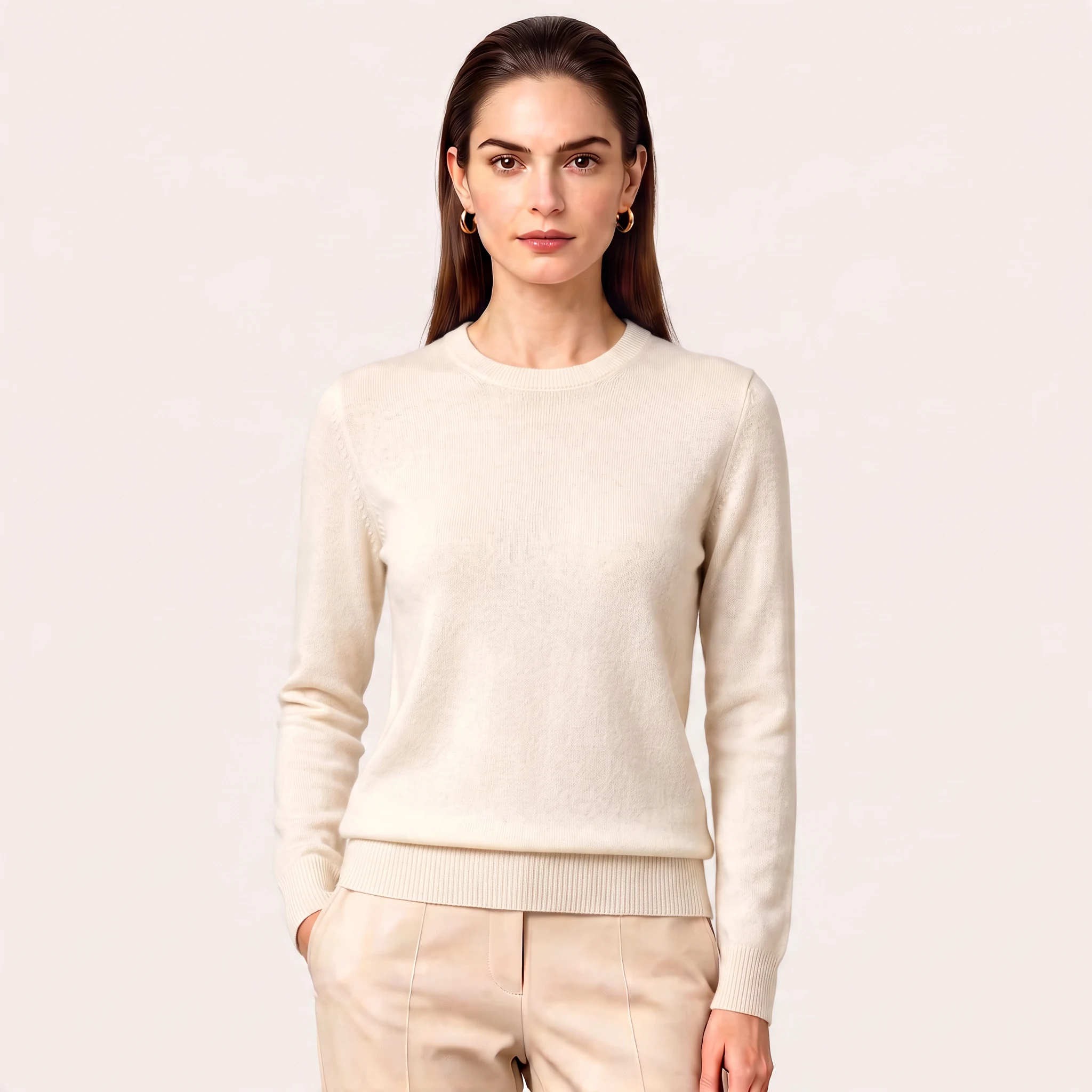
- Plain Knit (Jersey / Stockinette Stitch): Every loop is drawn through the loop below it in a single flat plane, producing smooth vertical “V” wales on the face and horizontal purl arcs on the reverse. Because the yarn travels in a direct, uninterrupted path across each course, fabric thickness remains slim (1.8–2.4 mm in 12gg) with maximum lateral elasticity and fluid drape.
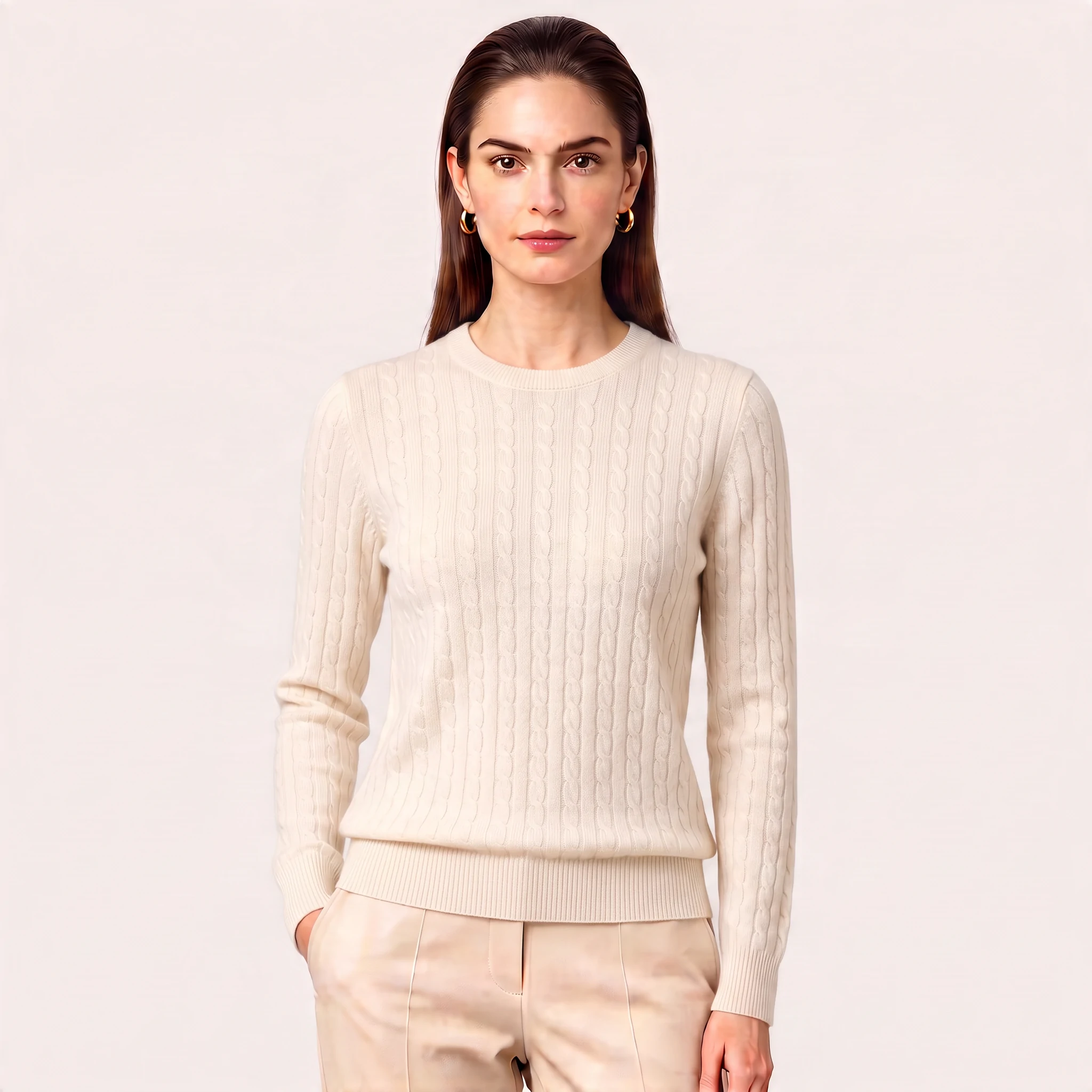
- Cable Knit (Crossed Rope Architecture): Computerized transfer cams physically lift groups of 3 to 6 stitches off their needles, cross them diagonally over adjacent stitches, and alternate raised knit columns with recessed purl troughs. Those overlapping bridges stack two to three layers of cashmere yarn at every crossover point, increasing fabric caliper to 3.8–6.5 mm and requiring 35%–45% more raw cashmere per garment.
2. Cable Knit vs Plain Knit Cashmere: Technical Comparison Table
The table below compares Plain Knit and Cable Knit sweaters engineered at the MITONY atelier across yarn consumption, thermal retention, layering clearance, and gauge availability:
| Technical Parameter | Plain Knit (Jersey / Stockinette) | Cable Knit (3D Rope Stitch) |
|---|---|---|
| Surface Architecture | Flat, uniform micro-wales with a smooth, matte-lustre handfeel | Raised braided rope columns alternating with recessed purl channels |
| Garment Weight (12gg Size M/L) | 230 – 310 g (Lightweight to midweight) | 340 – 440 g (+35% to +45% higher yarn density) |
| Garment Weight (7gg / 3gg Chunky) | 360 – 520 g (Structured winter weight) | 490 – 680 g (Heavyweight heritage winter armour) |
| Fabric Thickness (Caliper) | 1.8 – 2.4 mm (12gg) / 3.2 – 4.2 mm (7gg) | 3.6 – 4.8 mm (12gg) / 5.2 – 7.0 mm (7gg & 3gg) |
| Thermal Insulation & Comfort Range | Moderate breathability; ideal for 10°C – 22°C (50°F – 72°F) & heated offices | High dead-air thermal trapping; ideal for -5°C – 14°C (23°F – 57°F) |
| Layering Under Tailored Blazers | Excellent: zero sleeve bunching under unstructured or structured suit jackets | Moderate (12gg) to Outerwear-Only (7gg/3gg): best under relaxed overcoats or worn solo |
| Pilling Visibility & Resistance | Smooth face shows surface pills more easily; requires occasional cashmere combing | High stitch tension locks fibres tightly; textured valleys naturally camouflage minor fuzz |
| Compatible Knitting Gauges | 16gg, 12gg, 7gg, 3gg (All 4 gauges supported) | 12gg, 7gg, 3gg (Not used on ultra-fine 16gg due to needle-transfer tension) |
| MITONY Bespoke Price Range | $220 – $640 USD (Depends on yarn & gauge) | $250 – $725 USD (Reflects +35%–45% extra yarn weight & knitting time) |
3. Warmth & Microclimate: Why Cable Knit Feels Twice as Warm Outdoors
In textile thermal engineering, warmth is governed not just by fiber composition, but by the volume of still air (“dead air”) trapped within the fabric’s three-dimensional matrix. Cashmere’s natural crimp already traps micro-pockets of air between 15.5–15.8μm fibres, providing roughly three times the warmth-to-weight ratio of standard sheep’s wool.
When you knit that same cashmere into a Cable Knit pattern, two thermal amplifiers occur simultaneously:
- Double-Layer Crossover Bridges: Where the cable rope twists across 3 to 6 needles, yarns physically overlap, creating double-thickness zones across the chest, back, and sleeves that dramatically slow convective heat loss in chilly wind.
- Accordion Purl Channels: Flanking every raised cable rope is a recessed vertical column of reverse-stockinette (purl) stitches. At rest, the elastic rib-like pull of the cable draws these channels inward, creating deep air troughs that hold warm body heat next to your core.
Conversely, Plain Knit excels in temperature-regulated indoor environments. If you commute between brisk morning air and a 21°C (70°F) heated office or airplane cabin, a 12gg Plain Knit 100% Cashmere Crew Neck Pullover releases excess humidity without overheating.
4. Does Cable Knit Cashmere Pill More or Less Than Plain Knit?
One of the most frequent questions on knitwear forums is whether the textured ridges of a cable sweater attract more friction and pilling than a smooth jersey sweater. The answer depends on stitch tension and optical camouflage:
- Higher Loop Tension in Cable Stitches: Because crossing stitches laterally puts additional mechanical tension on each loop, the individual 15.5–15.8μm fibres (with a 38–42mm staple length) are anchored more tightly inside the yarn twist. Loose fibre tips have less slack to migrate out of the yarn core during gentle everyday wear.
- Visual Camouflage vs Flat Exposure: On a flat Plain Knit sweater, even five tiny pills on the chest catch oblique light and stand out against the uniform surface. On a Cable Knit sweater, the three-dimensional shadow lines of the rope twists visually break up the surface, hiding minor fuzz between combings.
- How to Comb a Cable Knit Sweater: When maintaining a Men’s Cable Knit Cashmere Crew Neck or Women’s Cable Knit Cashmere Sweater, glide a cedar cashmere comb gently parallel to the vertical cable ropes rather than scraping perpendicular across the raised crossovers. (For a deeper dive into fibre length and twist, read our Technical Guide to Cashmere Pilling, Micron Count & 2-Ply Twist.)
5. How to Pair Stitch Structure with Gauge (3gg, 7gg, 12gg & 16gg)
In the MITONY custom configurator, stitch structure works hand-in-hand with knitting gauge (needles per inch) and yarn ply:
- 16gg Ultra-Fine (Plain Knit Only): At 16 needles per inch using 1-ply / fine 2-ply yarn, loops are microscopic. Attempting heavy cable transfers at 16gg over-stresses ultra-fine yarns and flattens the rope relief, so 16gg is reserved exclusively for featherlight Plain Knit layering pieces.
- 12gg Classic All-Season (Plain Knit or Fine Dress Cable): Our most popular gauge. A 12gg Plain Knit is the quintessential smart-casual wardrobe staple; a 12gg Cable Knit produces a refined, low-profile “dress cable” that still fits comfortably beneath a winter blazer or trench coat without looking bulky.
- 7gg Mid-Heavy Structured (Plain Knit or Heritage Aran Cable): Knitted with multi-end 2/26Nm yarns, a 7gg Cable Knit delivers bold, high-relief rope geometry with substantial heft (480–580g), ideal for autumn/winter weekends and chalet wear.
- 3gg Heavy Chunky (Statement Outerwear Cable or Plain): Our heaviest winter gauge (550–680g+). A 3gg Cable Knit Cardigan or Turtleneck functions as a standalone knit jacket in freezing climates. See our Complete 3gg vs 7gg vs 12gg vs 16gg Gauge Comparison for full gram-weight charts.
6. Fit & Sizing Tip: Does Cable Knit Fit Tighter Than Plain Knit?
Because cable columns act like miniature elastic springs, an unblocked cable knit fabric naturally contracts horizontally by 8% to 12% compared to a flat jersey knit. Cheap mass-market cable sweaters often feel restrictive across the shoulders and chest because factories use the same pattern block without compensating for cable draw-in.
At MITONY Bespoke Cashmere, our Shima Seiki and Stoll programming automatically recalculates stitch-count compensation whenever you toggle from Plain to Cable in the Create My Sweater configurator. Whether you select a standard US size (XS to 5XL) or input custom chest, shoulder, sleeve, and torso centimetre adjustments, the finished garment measures true to your exact specification after steam relaxation.
Frequently Asked Questions
Why is a cable knit cashmere sweater more expensive than a plain knit sweater?
A cable knit cashmere sweater requires 35% to 45% more raw cashmere yarn by weight than a plain (jersey) knit sweater of the same size and gauge because the crossed rope stitches stack multiple layers of yarn. In addition, computerized needle-transfer racking slows knitting machine carriage speed by roughly 25%–30%, increasing production time per garment.
Is cable knit warmer than plain knit cashmere?
Yes. In the same yarn and gauge, a cable knit cashmere sweater is significantly warmer outdoors because the overlapping rope bridges double the fabric thickness (3.6–6.5mm vs 1.8–2.4mm) and the recessed purl channels trap pockets of insulating dead air against your torso.
Can you wear a cable knit cashmere sweater under a suit jacket or blazer?
Yes, if you choose a 12-gauge (12gg) fine dress cable knit. A 12gg cable knit has a low-profile relief (3.6–4.2mm) that fits smoothly under unstructured blazers and winter sport coats. For sharp, slim-fit business suits, a 12gg or 16gg Plain Knit sweater offers the cleanest sleeve glide.
Does cable knit cashmere stretch out or shrink more than plain knit?
Cable knit has higher horizontal elasticity (it hugs the silhouette gently like ribbing and springs back into shape) but slightly more vertical weight. Always hand-wash in cold water (under 30°C) and dry flat on a towel so the heavier wet weight of the cable ropes does not stretch the garment lengthwise.
Can I customize any MITONY sweater style in either Cable Knit or Plain Knit?
Yes. Across all 9 women’s and men’s silhouettes at MITONY Bespoke Cashmere—including Crew Neck, V-Neck, Turtleneck, Mock Neck, Button Cardigans, Zip Cardigans, Vests, and Hoodies—you can select either Plain Knit or Cable Knit across 188 yarn colours and US sizes XS to 5XL with a 1-piece minimum order.
Continue Reading in the Bespoke Journal

2-Ply vs 3-Ply vs 4-Ply Cashmere: What Does Ply Mean & How Many Plies Do You Need?
In knitwear, "ply" measures how many single spun strands are twisted together in opposite directions (S-twist and Z-twist) to form one balanced knitting yarn…

Cashmere Sweater Neckline Guide: Crew Neck vs V-Neck vs Turtleneck vs Mock Neck & Polo
Choose a Crew Neck for longer face shapes and standalone casual wear; a V-Neck to elongate rounder/square faces and frame collared dress shirts; a…

Inner Mongolian vs Scottish vs Italian Cashmere: What Actually Determines Sweater Quality?
Over 70% of the world's finest Grade-A raw cashmere (14.5–15.8μm, 38–42mm staple length) originates on the Inner Mongolian plateau, which is also where heritage…